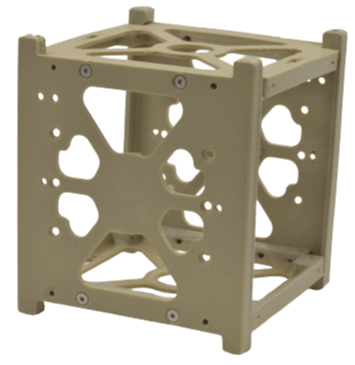
A longstanding assumption among materials engineers in the design for additive manufacturing (DfAM) field is that additively manufactured thermoplastics are inherently inferior to their injection-molded counterparts. In conventional Fused Filament Fabrication (FFF), parts frequently suffer from anisotropic mechanical properties, where the vertical (ZX) axis exhibits only a fraction of the strength found in the horizontal (XY) build plane.
Orion AM engineers solutions to these limitations by advancing thermal processing, demonstrating that this weakness is not an intrinsic limitation of polymers like Polyether ether ketone (PEEK) and its ultra-high-temperature peers. Rather, it is a consequence of unoptimized thermal history during deposition.
By implementing precise thermal history control for PEEK, additive manufacturing systems can achieve injection molding strength in 3D printed parts, yielding high relative density and near-isotropic mechanical performance directly off the build plate.
Thermal History Control & Polymer Physics
PEEK is a semi-crystalline thermoplastic with a melting point of 343°C and a glass transition temperature of 143°C. Its mechanical performance, including high tensile strength, stiffness, and chemical resistance, depends heavily on the formation and alignment of its crystalline structures.
When processing semi-crystalline polymers in standard printing systems, the thermal history of each deposited bead is fragmented:
- Extrusion and Rapid Cooling: Molten polymer exits the nozzle at temperatures above 380° C and immediately encounters cooler ambient air.
- Interlayer Temperature Differences: If the surface temperature of the underlying layer drops below the glass transition point before the next bead is applied, polymer chain diffusion across the boundary is halted.
- Micro-Void Formation: Incomplete molecular entanglement creates gaps between layers and internal porosity within them, resulting in relative densities between 87% and 95% and severe Z-axis debonding under load.
Achieving structural parity with injection molding requires managing the polymer's thermal history so that the interface remains at the optimal thermodynamic state for molecular interdiffusion and uniform crystallization.
In-Situ Crystallization: Eliminating Post-Process Annealing
In traditional processing workflows, printed PEEK components often undergo secondary post-processing, such as furnace annealing, in an attempt to induce crystallization and relieve internal stresses. However, while post-print heat treatment can increase overall crystallinity, research shows it cannot collapse internal void pockets or repair micro-porosity already locked into the structure during deposition. And most importantly, annealing cannot improve interlayer bonding between layers that are not properly fused during printing.
To establish optimal interlayer strength, in-situ crystallization for PEEK 3D printing must occur dynamically during the build. Orion AM’s proprietary Thermal Radiation Heating (TRH) process achieves this through a decoupled, multi-zone thermal architecture:
- High-Temperature Control: An enclosed build chamber operating up to 315° C (with heated bed control up to 320° C) maintains environmental equilibrium, preventing premature thermal contraction.
- Focused Heating: Each printed layer is heated to its ideal fusion temperature, improving bonding with the successive layer.
By combining unfocused thermal radiation for overall geometric stability with focused precision heating, polymer chains retain sufficient thermal energy to crystallize across layer boundaries during deposition. This enables in-situ semi-crystallization between and within layers during the print, eliminating the need for post-print annealing steps
Empirical Case Study: Solvay KetaSpire® PEEK Mechanical Performance
To evaluate the mechanical outcome of this controlled thermal history, independent third-party testing was conducted on commercial Syensqo (formerly Solvay) KetaSpire® PEEK processed using Orion AM’s TRH system.
1. Density and Porosity
Micro-CT scanning and Archimedes density measurements confirm that TRH-printed PEEK components achieve a relative density of up to 99.95%. The near-complete elimination of internal voids produces a homogeneous internal structure comparable to solid, injection-molded material.
2. Tensile Strength and Isotropy
Tensile evaluation across standard orientations demonstrates that radiative heating enables the vertical Z-axis bond strength to match or exceed baseline injection molding reference values:
Orientation / Process | KetaSpire® PEEK Tensile Strength (MPa) | Tensile Modulus (GPa) | Elongation at Break (%) |
Injection Molding (Reference) | 91.0 MPa | 3.20 GPa | 10.0% |
Orion TRH, XY (Flat) | 100.0 MPa
| 4.00 GPa | 16.3% |
Orion TRH, XZ (On-Edge) | 97.0 MPa | 4.10 GPa | 14.3% |
Orion TRH, ZX (Vertical) | 95.4 MPa | 3.80 GPa | 8.5% |
Data: Solvay KetaSpire® PEEK third-party testing via Orion AM TRH Process.
Syensqo (Solvay) KetaSpire® PEEK printed in the vertical (ZX) orientation achieved an ultimate tensile strength of 95.4 MPa, surpassing the 91.0 MPa reference value for standard injection molding. Because interlayer bond strength approaches the intrinsic strength of the extruded polymer thread, mechanical performance becomes virtually independent of print orientation or infill angle
Conclusion
The assumption that 3D-printed polymers are inherently weaker than molded components reflects the thermodynamic limitations of traditional ambient heating, not the material limits of PEEK and its peers. By managing the polymer's thermal history with targeted Thermal Radiation Heating, additive systems can achieve up to 99.95% relative density, in-situ semi-crystallization, and vertical tensile properties that meet or exceed injection molding benchmarks.